
Shoulder Pain Treatment — Chiropractor in Elephant & Castle, London SE17
Shoulder pain is rarely a shoulder problem in isolation. The shoulder
operates within a chain — cervical spine, thoracic spine, scapula,
and rotator cuff. When any part of that chain fails, the shoulder
takes the load. We treat the chain.
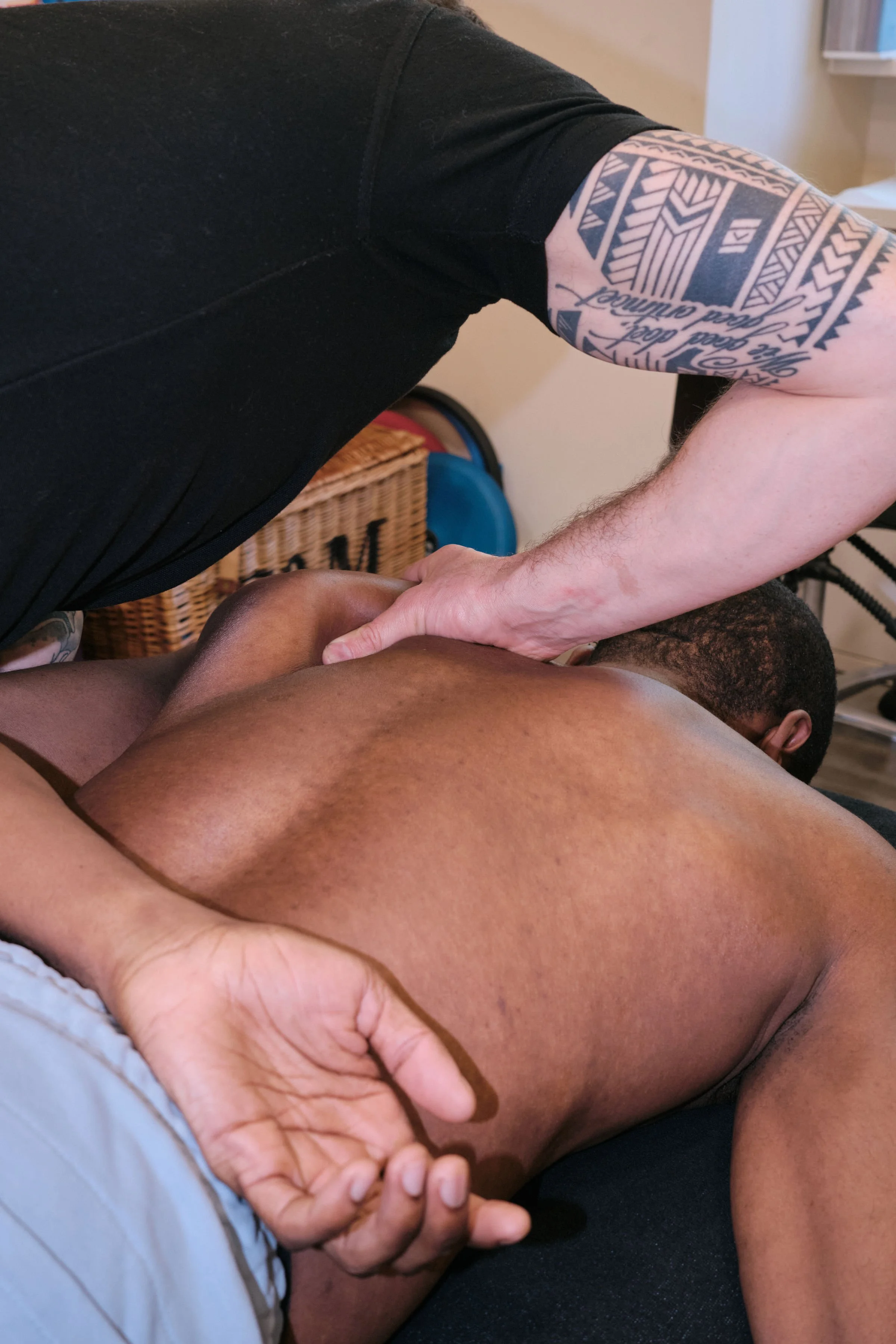
What Is causing Your Shoulder Pain?
The shoulder joint is the most mobile joint in the body — and mobility comes at the cost of stability. It is entirely dependent on the surrounding musculature, fascia, and structural alignment to function without breakdown.
Common structural causes of shoulder pain we assess at MotionFix:
— Rotator cuff dysfunction: weakness or inhibition in the four muscles that stabilise the glenohumeral joint, leading to impingement and progressive breakdown.
— Frozen shoulder (adhesive capsulitis): progressive stiffening of the shoulder capsule, typically with loss of external rotation. Often secondary to a period of disuse or compensation.
— Shoulder impingement: compression of the supraspinatus tendon under the acromion — usually driven by poor scapular mechanics and thoracic restriction.
— Thoracic and cervical contribution: restriction in the thoracic spine or cervical spine alters scapular positioning and shoulder blade movement patterns — creating the conditions for shoulder breakdown.
— AC joint irritation: disruption at the acromioclavicular joint from impact, overload, or repetitive strain.
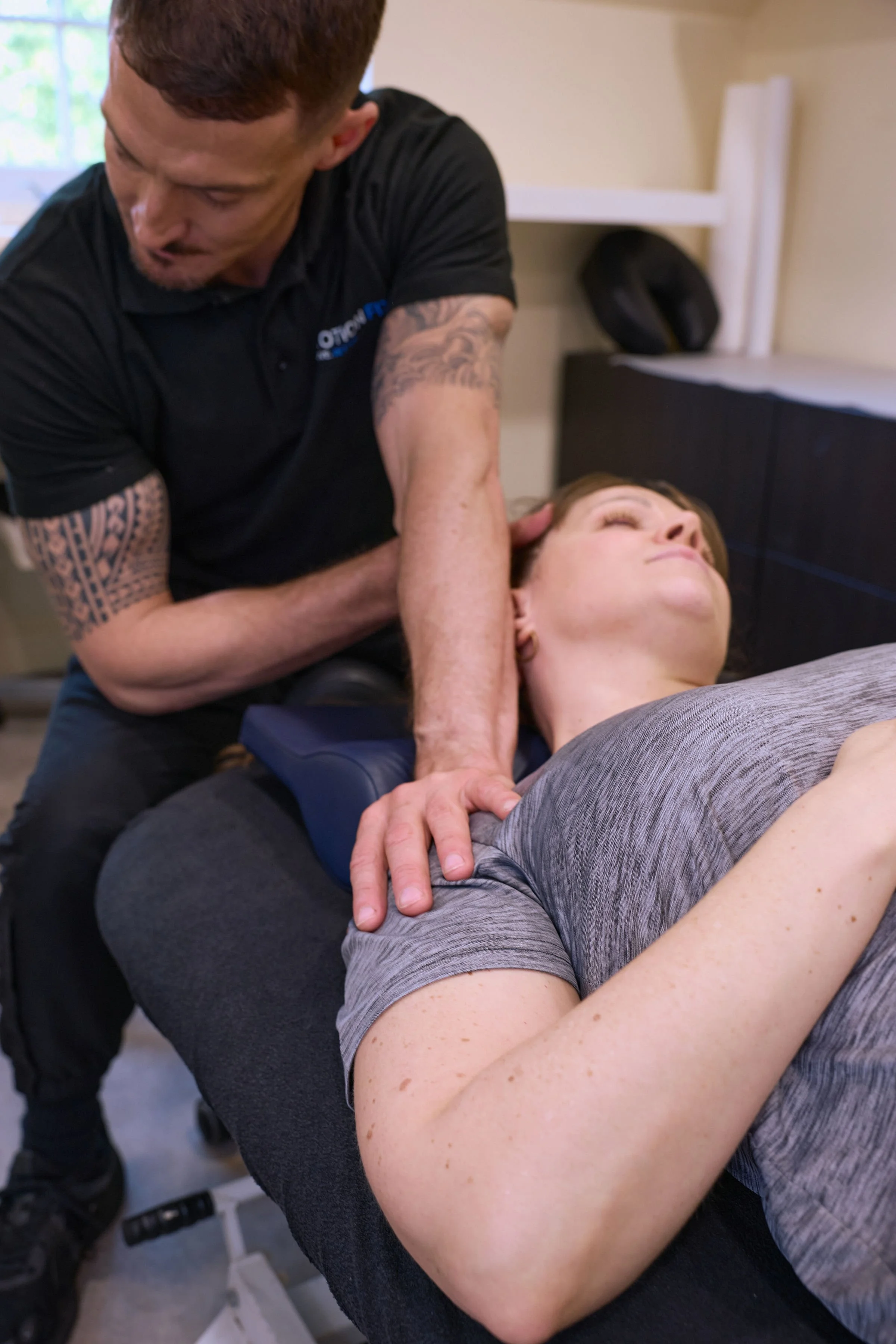
How We Treat Shoulder Pain
The assessment maps your full upper quadrant — cervical spine, thoracic
spine, scapular movement, and shoulder mechanics — to identify exactly
where the structural failure is occurring.
Treatment is targeted at the origin of the problem:
— Thoracic and cervical adjustments to restore the structural foundation
of shoulder mechanics
— Rotator cuff and scapular stabiliser activation protocols
— Myofascial release for pectorals, subscapularis, and upper trapezius
— Medical dry needling for inhibited rotator cuff musculature
— Shoulder joint mobilisation where capsular restriction is present
— Graded loading strategy for return to sport or gym training
Shoulder Conditions We Treat
— Rotator cuff strain or tear (partial)
— Frozen shoulder and capsular tightness
— Shoulder impingement syndrome
— AC joint sprain and irritation
— Shoulder pain from gym training or overhead sport
— Shoulder dysfunction related to neck or thoracic restriction
— Post-surgical shoulder rehabilitation support
— Chronic shoulder pain that has not resolved with physio
Shoulder Pain FAQs
-
Yes. Chiropractic treatment for frozen shoulder focuses on restoring thoracic
and cervical mechanics — which directly influence shoulder mobility — alongside
targeted capsular mobilisation. The approach varies depending on which phase
of frozen shoulder you are in: freezing, frozen, or thawing.
-
Yes, this is common. Cervical nerve root compression — particularly at C5
and C6 — produces referred pain into the shoulder and upper arm that can
be indistinguishable from local shoulder pathology. Owain will assess
both the cervical spine and the shoulder in your initial consultation.
-
Yes. MotionFix is at 64 Larcom Street, Elephant & Castle, SE17 — close
to Borough, Kennington, and Southwark.
Book Your Shoulder Assessment — SE17, London
60 minutes · Full upper quadrant structural assessment · First treatment
included · £95 · Same-week appointments available.